The Counter-Manual of Co-Production: Enabling urban co-production to face inequalities and democratic challenges
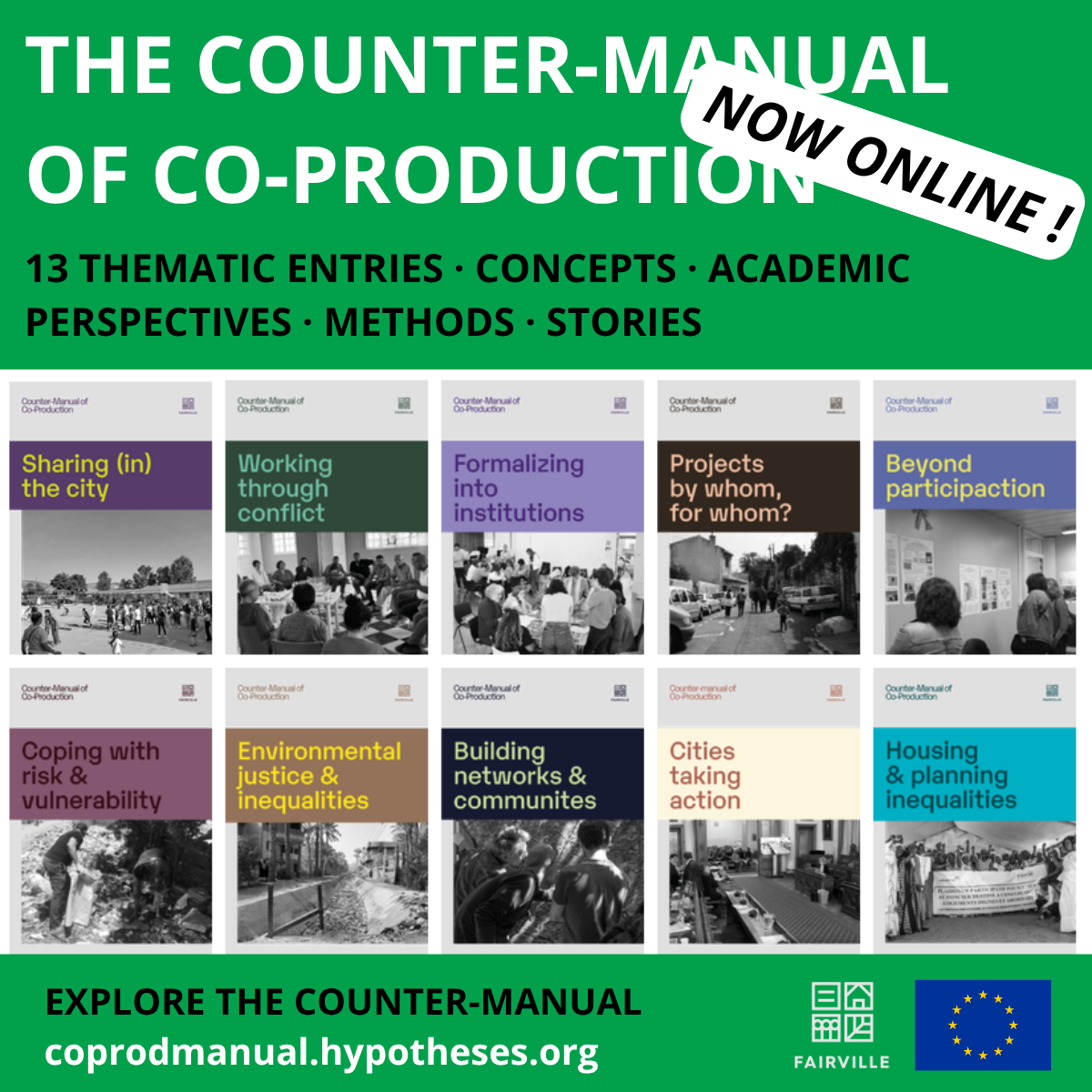
The Fairville project team has launched the Counter-Manual of Co-Production. This Counter-Manual is the result of a collective effort bringing together different perspectives, experiences and forms of knowledge around urban co-production, made possible in part by Giza Fairville Lab. We hereby would like to extend a special recognition to Ahmed Zazaa, Kawkab Tawfik, and Paloma Anger for bringing our company’s expertise to the redaction team. As this is an evolving resource, the Fairville partners hope that the manual will continue to circulate, reach new audiences and generate further discussions around co-production, and most of all, Fairville wishes to make this Counter-Manual into a collective resource!
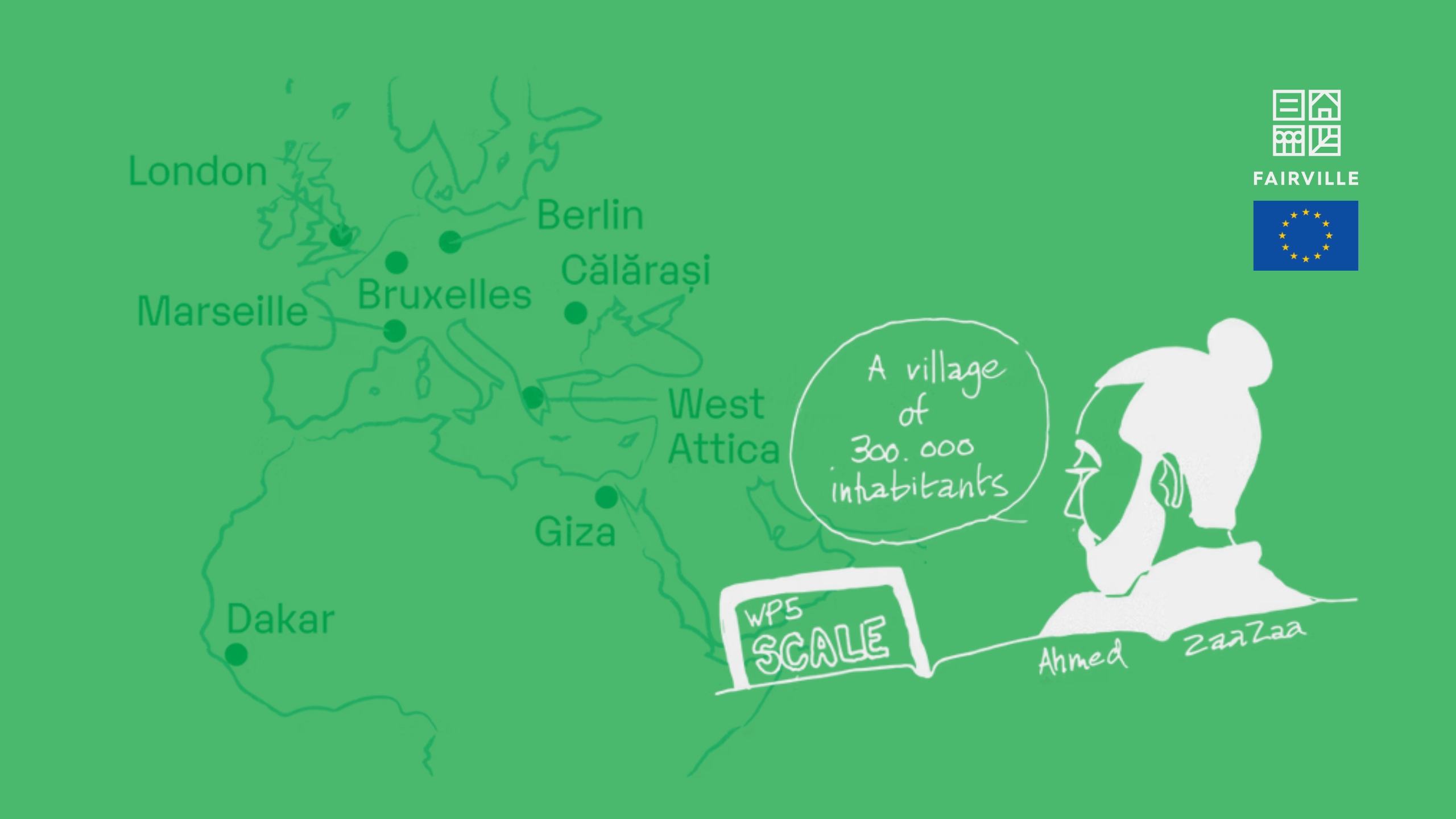
Resource: Fairville Counter-Manual of Co-productionDrawing on the joint experiences and work of the Fairville Labs and projects throughout Europe and Africa, it brings together academic perspectives, practical tools and situated stories of co-production in Brussels, Berlin, Dakar, London, Marseille and West Attica. The Counter-Manual is articulated in 13 thematic entries, each following the same 4 sections structure :
- Words and/in action : grounded definition and use of concepts in social life, political debates with a focus on “cultural translation” of the words in different contexts.
- What academic literature has to say offers an academic background on co-production theories and presents the academic debates in urban studies around those theme.
- Methods cards present useful practical tools for co-production and participatory methods.
- Lab stories: situated cases of urban co-production projects, their sucesses and difficulties, and sometimes even their failures.
Project: Fairville The Counter-Manual is an online resource exploring urban co-production processes among citizens, activists, public institutions, civil society, universities and other urban actors. It aims to be a tool for activists, citizens, and stakeholders. It supports collective action and shared learning across different communities. Its goal is to bridge theory and practice, connecting academic and activist worlds while embracing evolving concepts and enhancing storytelling of urban co-production.
About the Fairville project
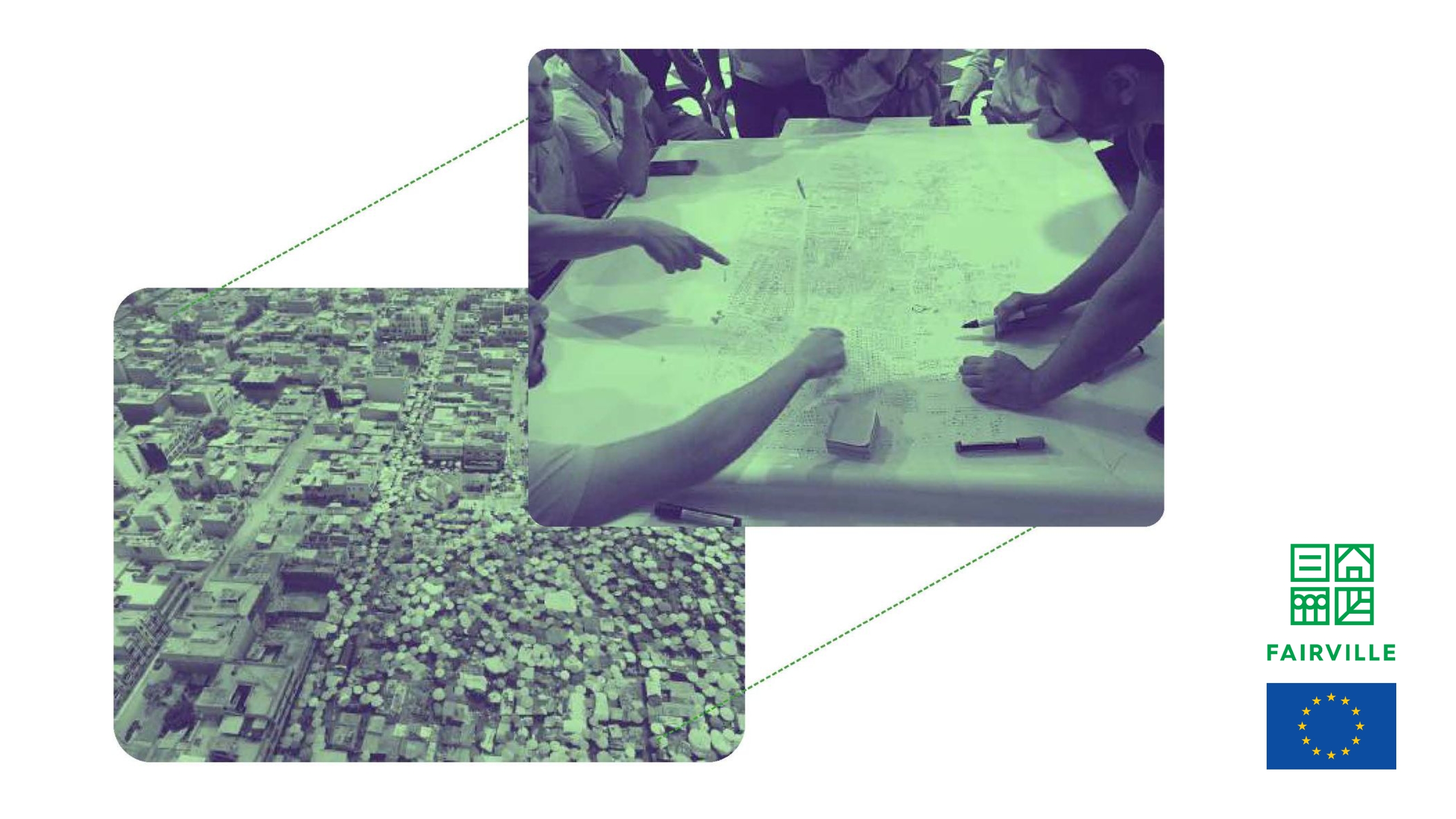
The Fairville project is an international and collaborative research project funded by Horizon Europe (EU’s funding programme for research and innovation) for the period 2023-2026. The project intends to address embedded urban inequalities and the challenge they raise to democracy in large cities and urban regions. It does so by supporting co production and bottom-up collaboration engaging citizens collectives in low-income neighbourhoods. The project uses participatory action-research and the co-production of knowledge as strategies of spatial justice to address urban inequalities affecting cities, mainly in Europe, but also in Africa. The research project is based in eight Fairville Labs, mostly linked to citizen-led initiatives run by local groups partnering in the project. The Labs are located in Athens, Berlin, Brussels, Cairo (Giza), Dakar, London and Marseille.